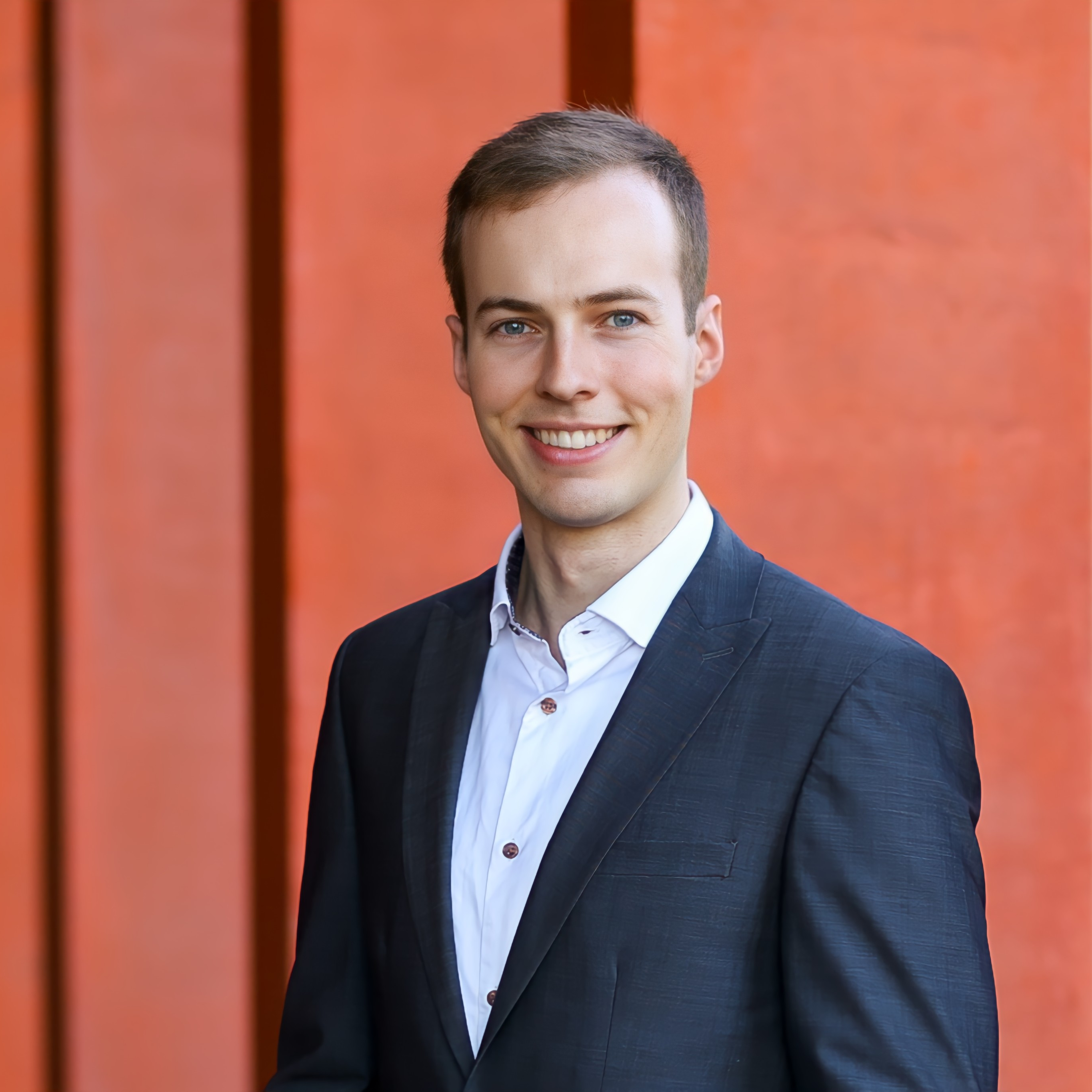
Malte H. Hinrichs
Education
PhD in Economics \hfill 10/2023–present
Queen’s University Belfast, UK
Affiliated with: Centre for Economics, Policy and History (CEPH)
Dissertation Title: Water, Wheels, and the Wealth of Nations: Geography and
Path Dependence in European Industrialization
Viva: 21/10/2026 (Passed with no corrections; highest possible outcome)
MSc Economics \hfill 09/2020–09/2022
University of Mannheim, Germany
Thesis: Engines of Growth? The Role of the Steam Engine for Long-Run
Economic Development in Germany
Visiting Student \hfill 02/2021–06/2021
NHH Norwegian School of Economics, Norway
BSc Economics \hfill 09/2017–08/2020
University of Mannheim, Germany
Thesis: The Long-Term Effects of Colonialism on Income Inequality
Visiting Student \hfill 08/2019–12/2019
Hong Kong University of Science and Technology, Hong Kong
Publications
“Water mills and human capital accumulation in industrialising Prussia” \hfill 07/2026
Explorations in Economic History, 101(1): 101767.
Article: doi:10.1016/j.eeh.2026.101767
Replication Package: doi:10.17632/pvnh7g4b39.2
Job Market Paper
“Leapfrogging or path dependence? Water mills and long-run growth in the Scottish Industrial Revolution”
Latest draft available on my website.
\begin{cvabstract} \noindent\textbf{Abstract:} Does technological change favour agile entrants or adaptable incumbents? I examine this using Scotland’s industrialisation, testing whether steam power allowed new locations to “leapfrog” centres of water power. Using a newly constructed dataset linking over 1,200 pre-industrial mills to parish-level outcomes, and an instrumental variable strategy based on geographic endowments, I reject the leapfrogging hypothesis. An additional mill in 1755 caused 8\% higher long-run population growth (driven by migration), with effects intensifying precisely when steam power became abundant. Micro-evidence reveals that hydraulically advantaged mill sites largely survived, transitioned to industrial production and avoided obsolescence by integrating steam power as a complementary technology. The findings demonstrate that proto-industrial water power provided the critical infrastructure and human capital for the steam age, challenging the view that coal endowments alone determined the industrial map. \end{cvabstract}
Working Papers
“Market access without roads: First-nature geography and European city growth, 700–1800”
Draft available upon request.
Teaching Experience
Queen’s University Belfast
Principles of Economics, Teaching Assistant (course design, tutorials) \hfill 09/2025–01/2026
Principles of Economics, Teaching Assistant (tutorials, exam supervision, marking) \hfill 09/2024–01/2025
University of Mannheim
Macroeconomics A, Teaching Assistant (tutorials, student mentoring) \hfill 02/2020–08/2020
Statistics II, Teaching Assistant (tutorials, student mentoring) \hfill 09/2019–12/2019
Principles of Economics, Teaching Assistant (tutorials, exam organisation) \hfill 09/2018–12/2018
Honours and Awards
Winner, Three Minute Thesis (3MT®) Competition, Queen’s University Belfast \hfill 04/2026
New Researcher Prize, Economic History Society \hfill 04/2026
Graduated in top 20% of MSc Economics cohort, University of Mannheim \hfill 09/2022
Graduated in top 10% of BSc Economics cohort, University of Mannheim \hfill 08/2020
Dean’s List, Hong Kong University of Science and Technology \hfill 12/2019
Research Grants and Funding
Santander Career Support Award \hfill 05/2026
Economic History Society New Researcher Conference Bursary \hfill 01/2026
EHES Conference Travel and Accommodation Grant \hfill 07/2025
Economic History Society Young Scholar Conference Bursary \hfill 01/2025
CEPH Studentship, Irish Higher Education Authority, full funding for PhD studies \hfill 10/2023
PROMOS Scholarship, German Academic Exchange Service, full funding for HKUST \hfill 06/2019
Professional Memberships
Economic History Society (UK)
European Historical Economics Society
Irish Economic Association
Academic Presentations
Invited Talks
Graduate Seminar in Economic and Social History, University of Oxford \hfill 05/2026
Economic History Seminar, University of Hohenheim \hfill 03/2026
Department of Economics Seminar Series, Heriot-Watt University Edinburgh \hfill 01/2026
Centre for Economic History Seminar Series, Queen’s University Belfast \hfill 04/2024
Conference and Workshop Presentations
CEPH PhD Workshop, Queen’s University Belfast \hfill 05/2026
Queen’s Postgraduate Research Conference, Queen’s University Belfast \hfill 05/2026
Economic History Society Conference, London School of Economics \hfill 04/2026
Irish Postgraduate and Early Career Economics Workshop, Maynooth University \hfill 01/2026
European Historical Economics Society Conference, University of Hohenheim \hfill 09/2025
CEPH Workshop in Quantitative Economic History, Queen’s University Belfast \hfill 06/2025
Queen’s Postgraduate Research Conference, Queen’s University Belfast \hfill 06/2025
Economic History Society Conference, University of Strathclyde \hfill 04/2025
Centre for Economic History PhD Discussion Group, Queen’s University Belfast \hfill 02/2025
Centre for Economic History PhD Discussion Group, Queen’s University Belfast \hfill 03/2024
Professional Development
Graduate Teaching Assistant Workshop, The Economics Network \hfill 01/2025
Economic History Society Residential Training, University of Warwick \hfill 11/2024
Financial, Economic and Business History Summer School, University of Groningen \hfill 06/2024
Workshop for Teaching Assistants, University of Mannheim \hfill 09/2018
Public Engagement
‘Die Kraft des Wassers: Deutschlands vergessene Industrialisierung’ \hfill 08/2026
Featured Interview, GEO Magazine (Germany)
‘Chatting GPT: What does history tell us about the future of AI?’ \hfill 10/2025
Invited Speaker, ESRC Festival of Social Science
Industry Experience
KPMG AG Wirtschaftsprüfungsgesellschaft
Junior Consultant, Global Transfer Pricing (Mannheim, Germany) \hfill 04/2023–09/2023
Technical Skills
Econometric & Spatial Methods: Causal Inference (IV/2SLS, DiD, Panel/FE), Spatial Econometrics,
GIS & Cost-Surface Analysis, Gravity Modelling
Software & Programming: R (sf, terra), Python, Stata, Matlab, QGIS, Git, Quarto, LaTeX
Languages: German (native), English (fluent), Spanish (intermediate), Latin (reading)
References
::: {layout-ncol=2} Chris Colvin (PhD Supervisor)
Queen’s University Belfast
\href{mailto:chris.colvin@qub.ac.uk}{chris.colvin@qub.ac.uk} $\cdot$ \href{https://chris-colvin.github.io/}{Website}
Alexander Donges (MSc & BSc Advisor)
University of Mannheim
\href{mailto:donges@uni-mannheim.de}{donges@uni-mannheim.de} $\cdot$ \href{https://sites.google.com/view/alexanderdonges/}{Website} :::
::: {layout-ncol=2} Alan Fernihough (PhD Supervisor)
Queen’s University Belfast
\href{mailto:a.fernihough@qub.ac.uk}{a.fernihough@qub.ac.uk} $\cdot$ \href{https://pure.qub.ac.uk/en/persons/alan-fernihough}{Website}
John Turner (CEPH Director)
Queen’s University Belfast
\href{mailto:j.turner@qub.ac.uk}{j.turner@qub.ac.uk} $\cdot$ \href{https://pure.qub.ac.uk/en/persons/john-turner/}{Website} :::
#| echo: false
#| results: asis

invisible(Sys.setlocale("LC_TIME", "English_United Kingdom"))
cat("\\vspace{2em}\n\n\\begin{center}\n\\textit{Last updated:", format(Sys.Date(), '%B %Y'), "}\n\\end{center}")